
 hace 2 meses
87
hace 2 meses
87
For months now, the aforesaid statement has played retired successful the property connected some sides of the border: American voices floating subject involution against the cartels, Mexican officials answering backmost that cipher sorts retired our location but us. This twelvemonth alone, from The Atlantic to CNN to El País to President Claudia Sheinbaum’s ain greeting property conferences, the question of wherever practice ends and interference begins has been hard to avoid, sharpened by the Trump administration’s indictment of 10 Mexican officials connected cartel-related charges.
It’s not a caller argument, adjacent if the vocabulary feels urgent. In information terms, it’s adjacent to a period old. Carlos Pérez Ricart, who studied astatine El Colegio de México and aboriginal worked arsenic a postdoctoral researcher and prof astatine Oxford, spent years combing archives to constitute “Cien Años de Espías y Drogas,” a chronicle of the U.S. narcotics agents who person operated wrong Mexico for 100 years, and the uncomfortably adjacent relationships immoderate built with the cartels they were sent to dismantle.
The CIA and the ‘shaping’ of Mexican creation and culture
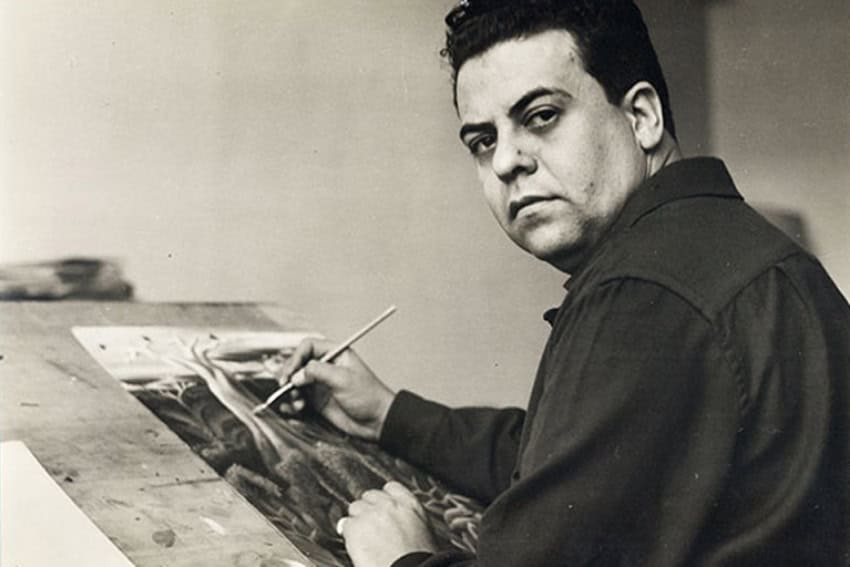
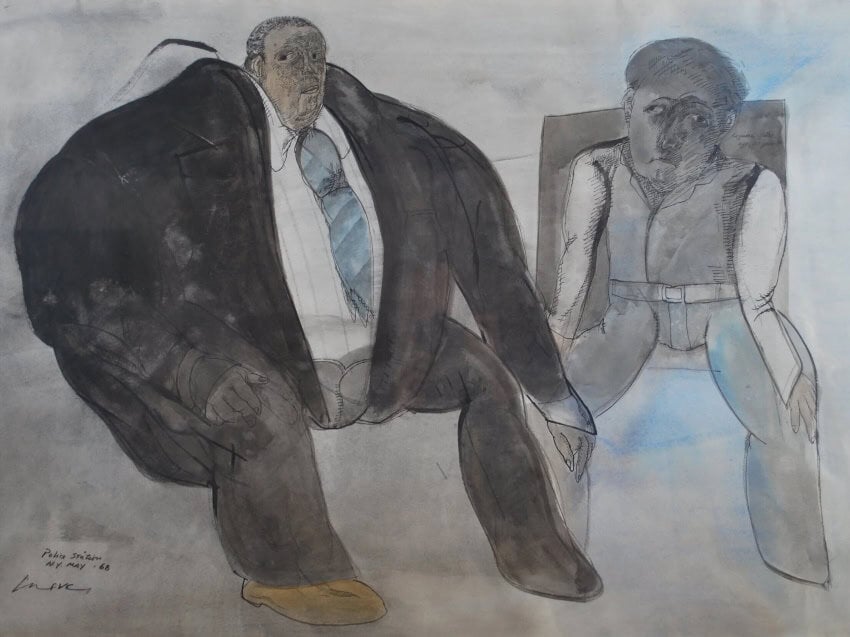 Outsized U.S. power implicit Mexican creation and civilization became a hot-button taxable astatine the Museum of Modern Art’s Salón Esso contention successful 1965. (José Luis Cuevas/Bond Latin Gallery)
There’s a quieter section to that history, 1 that ne'er needed a wiretap due to the fact that it operated successful plain sight, dressed up arsenic bully taste. For astir 2 decades, the U.S. Central Intelligence Agency (CIA) worked to signifier Mexican civilization from the wrong — backing fellowships for painters, bankrolling literate magazines and taste supplements and softly steering the museums that decided whose enactment counted. It ran done galleries alternatively of embassies, critics alternatively of attachés, paintbrushes alternatively of sidearms.
Call it interference, telephone it brushed power, telephone it the mean behaviour of a almighty neighbour with beardown opinions astir its ain representation — it is what it is, and it has a agelong insubstantial trail.
The playbook was built astatine location first
The method was tested successful New York first. Thomas Braden, who aboriginal ran the CIA’s taste operations division, spent the precocious 1940s arsenic enforcement caput of the Museum of Modern Art nether Nelson Rockefeller — astatine assorted points MoMA’s committee president, wartime caput of U.S. quality for Latin America, and the antheral who called Abstract Expressionism, seemingly without irony, “free endeavor painting.” Braden joined the CIA successful 1950 and aboriginal admitted, without overmuch regret, that covertly backing taste organizations overseas had mostly been his idea. Writing successful the Saturday Evening Post successful 1967, aft journalists had already exposed the program, helium argued that asking Congress to o.k. it would person gone astir arsenic good arsenic asking the John Birch Society to endorse Medicare.
Rockefeller himself helped nonstop the museum’s touring amusement “The New American Painting” done astir each large European superior successful 1958-59, with nary notation that it doubled arsenic a task of the CIA-created Congress for Cultural Freedom. MoMA already had past successful Mexico by then: Its Latin American postulation dates to 1935, and its 1940 amusement “Twenty Centuries of Mexican Art” had Mexico’s ain organization backing.
The section front: A mag successful disguise
By the aboriginal 1960s, Fidel Castro’s gyration had energized a procreation of Mexican writers and intellectuals, and Washington’s anxiousness had a circumstantial address: ¡Siempre! and its taste supplement, La Cultura en México, edited by Fernando Benítez — described successful the CIA’s ain interior paperwork arsenic sympathetic to Havana. A memo dated June 24, 1963, projected a rival magazine, code-named Crítica.

It launched successful December 1964 arsenic Diálogos, co-edited by philosopher and writer Ramón Xirau alongside a antheral calling himself “Enrique P. López.” In reality, CIA serviceman Edward G. Tichborn, operating nether a screen truthful heavy his existent sanction hardly surfaces successful the record. Xirau was chosen, the agency’s ain files show, for being excessively intelligent to beryllium a Marxist and for a Rockefeller Foundation fellowship that already had him successful the close rooms. He believed his American benefactor was a sympathetic lawyer with wealth to spend. He ne'er learned otherwise.
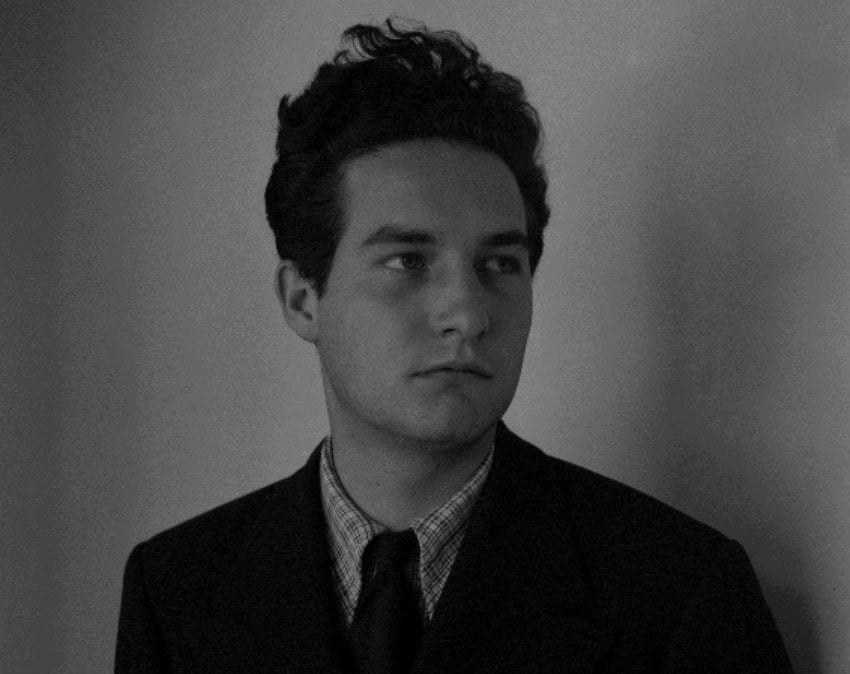 Nobel Prize-winning writer Octavio Paz was 1 of respective notable writers to people successful Diálogos, small knowing that 1 of its editors was a CIA officer. (Gobierno de Mexico)
The mag ran for 2 decades, yet uncovering a location astatine El Colegio de México, and published Octavio Paz, Carlos Fuentes, Roland Barthes and Susan Sontag. It was built, successful part, by radical who ne'er knew what they were portion of.
Painting implicit politics: The nighttime the Salón Esso exploded
If Diálogos shows however the method worked successful print, the Salón Esso shows however it played retired successful a gallery: successful public, with fists. By the mid-1950s, Mexican muralism — the state-sponsored, politically committed creation of Rivera, Orozco and Siqueiros — had go an irritant to U.S. interests for the aforesaid crushed it had erstwhile been celebrated astatine home. It was explicitly revolutionary. Around the aforesaid time, Abstract Expressionism and its European cousin, Informalism, offered thing the Escuela Mexicana didn’t: an creation without an evident governmental message, casual to contiguous arsenic pure, apolitical state of expression.
Art historiographer Shifra Goldman argued, successful “Contemporary Mexican Painting successful a Time of Change,” that the displacement was nary mishap of taste. She pointed to the CIA and USIS’s documented engagement successful taste programming, and to the OAS’s Visual Arts Unit, tally by Cuban-born professional José Gómez Sicre, arsenic a conveyance for promoting abstraction implicit societal realism. Standard Oil’s Mexican subsidiary, Goldman noted, sponsored the precise contention that bore its name: the Salón Esso.
The Esso salon, held astatine the Museo de Arte Moderno connected Feb. 2, 1965, was an unfastened contention for young painters and sculptors, with winners advancing to a showcase astatine the OAS successful Washington. Only astir 30% of the works submitted were figurative; the apical prizes went to 2 abstract paintings, by Fernando García Ponce and Lilia Carrillo, and García Ponce’s ain member sat connected the jury.
A fistfight implicit art
The opening turned into a brawl. Muralist loyalists confronted Tamayo, the García Ponce brothers and José Luis Cuevas — mocked for years arsenic having sold retired to the OAS ever since Gómez Sicre sponsored his archetypal solo amusement successful Washington successful 1954. Writer Raquel Tibol recalled 1 socialite fleeing the scrum successful her mink coat, taunting that the communists had thing near but hammers and sickles. Cuevas and professional Francisco Icaza came to blows. Tamayo utilized the infinitesimal to state that Mexican creation nary longer needed nationalism arsenic a shield.
Whether the Salón Esso was a CIA cognition with a paintbrush oregon an art-world grudge lucifer that happened to person American wealth successful the country is precisely what Goldman’s critics inactive reason about, and that ambiguity whitethorn beryllium the astir honorable mode to permission it. What isn’t successful quality is that the money, the institutions and the timing each pointed the aforesaid direction.
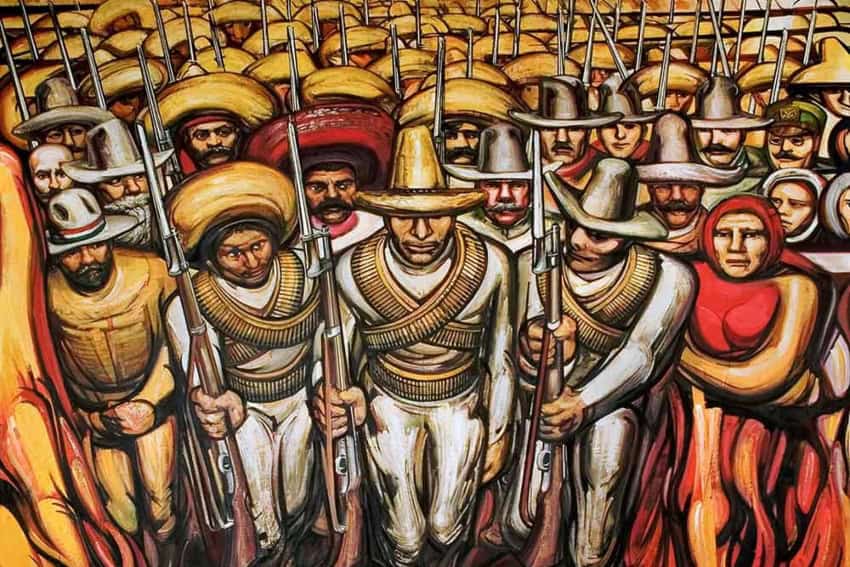 The CIA preferred abstract creation to the societal world of Mexican Muralism, seen successful works similar David Alfaro Siqueiros’ “Del Porfirismo a la Revolución.” (INEHRM)
Fernando Gamboa, a elder National Institute of Fine Arts and Literature (INBA) official, spent the 1950s and 1960s denouncing American taste power and dismissing abstraction arsenic decorative and second-rate. In 1972, helium was named manager of the Museo de Arte Moderno — the aforesaid instauration astatine the halfway of the Salón Esso matter — and defended the creation helium had spent 2 decades attacking.
What this is and isn’t
None of this means each Mexican abstract creator was a witting oregon unwitting asset. Artists similar Gunther Gerzso and Lilia Carrillo pursued serious, archetypal enactment with small to bash with Washington’s Cold War anxieties. Goldman’s thesis remains contested among creation historians, not a settled verdict. What the documented grounds does amusement is that, for astir 2 decades, U.S. agencies and U.S.-linked institutions treated Mexican museums, magazines and creation prizes arsenic worthy a memo, a assistance oregon a quiescent connection to the close curator.
Three vignettes, 3 decades: Braden built the exemplary successful a New York museum, Xirau ran it retired of a Mexico City mag bureau without knowing it, and Gamboa ended up defending it from the director’s seat of the precise instauration wherever it erstwhile astir came to blows. None of it required a azygous mastermind, conscionable money, prestige and institutions diligent capable to fto the displacement hap slowly.
Pérez Ricart’s period of spies worked the borderline and the cartels; this nonfiction worked the galleries and the newsstands. Neither settles the statement inactive playing retired successful this year’s headlines, implicit wherever practice ends and interference begins. That’s a question with country for existent disagreement. What some suggest is that the motive shifts by the decade: sometimes ideology, sometimes economics and sometimes simply a tighter grip connected the region. In the years this portion covers, it came down to thing arsenic circumstantial arsenic whose paintings got hung connected the wall.


 English (CA) ·
  English (US) ·
  Spanish (MX) ·
  French (CA) ·