
 hace 2 meses
87
hace 2 meses
87
One Mexican showed New Yorkers however to gully the Jazz Age, introduced Vanity Fair’s precocious nine to Harlem, helped rewrite the root communicative of Mesoamerica and founded Mexico’s nationalist schoolhouse of creation … yet astir radical person ne'er heard his name.
Meet Miguel Covarrubias Duclaud — amended known arsenic “El Chamaco,” oregon “The Kid,” to everyone who knew him. He was 19, spoke astir nary English and had ne'er near Mexico erstwhile helium boarded a vessel northbound successful 1923. Within a year, helium was 1 of the astir talked-about artists successful Manhattan. He ne'er truly stopped being talked astir — helium conscionable kept turning up successful fields cipher expected a creator and illustrator to extremity up in.
The origins of ‘El Chamaco’
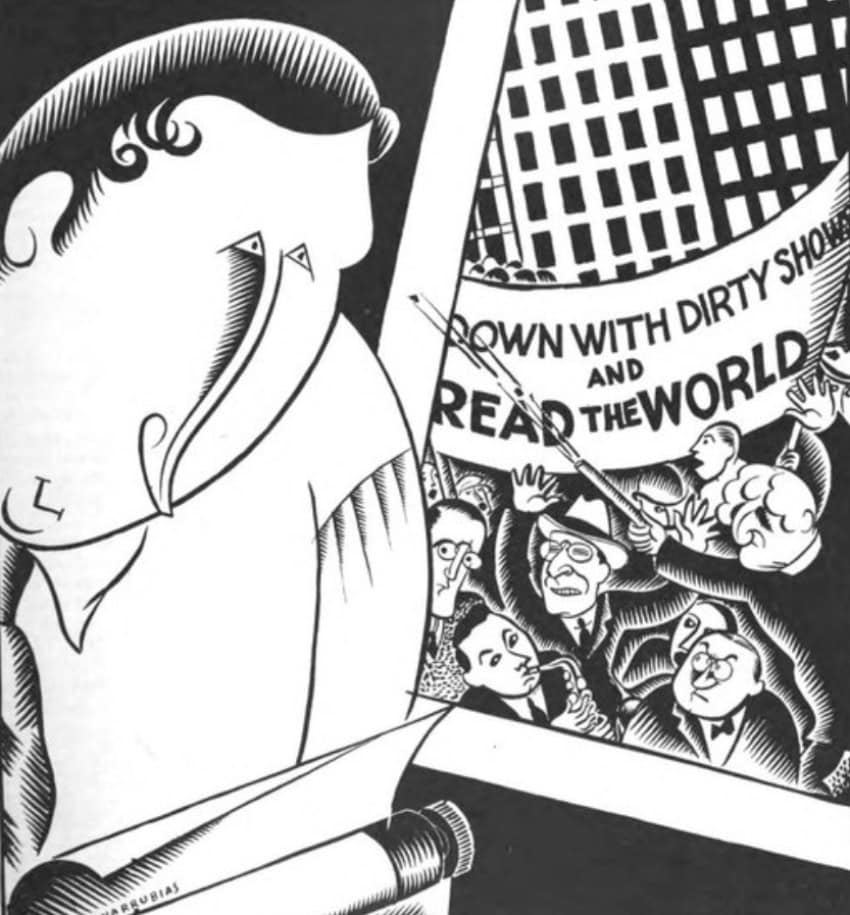 Covarrubias illustration for The New Yorker mag published successful 1925, erstwhile helium was lone 21 years old, but already a sensation successful New York City. (Miguel Covarrubias)
Born successful 1904 to an intelligence household successful Mexico City, Covarrubias blended French refinement (from his mother’s side) with Mexican technological curiosity (from his father’s). He was a gifted, rebellious teen who abandoned ceremonial schooling astatine 14 — leaving the Escuela Nacional Preparatoria down — and threw himself into drafting instead. By 16, helium was moving for large newspapers and authorities offices, crafting governmental caricatures and creator illustrations.
In the post-revolutionary taste ferment of 1920s Mexico, Covarrubias stood out. Artists similar Diego Rivera and José Clemente Orozco took notice. So did José Juan Tablada, the writer and diplomat who secured him a authorities assistance to survey successful New York — a strategical determination successful Mexico’s brushed powerfulness run to reshape its planetary representation pursuing the Mexican Revolution. The caller authorities urgently needed to task a peaceful, unchangeable and reliable representation to pull overseas investment.
A Mexican successful Manhattan
New York successful the 1920s was electrical — jazz, Art Deco and speakeasies successful a metropolis that had conscionable taken Paris’ crown arsenic the taste superior of the world. Tablada opened the archetypal doors, but it was the professional Carl Van Vechten who championed Covarrubias’ introduction into the “smart set,” the cosmopolitan ellipse that included the caricaturist Ralph Barton and, decisively, Frank Crowninshield, the exertion of Vanity Fair. Covarrubias’ archetypal caricatures ran successful January 1924. By March, helium had his ain solo amusement astatine the Whitney Studio Club. Being drawn by him had go a signifier of societal currency successful a metropolis obsessed with status.
What acceptable his enactment isolated wasn’t conscionable velocity oregon charm. His enactment blended Art Deco elegance with Cubist geometry and an astir surgical societal penetration — streamlined forms and assured achromatic washes that captured not conscionable a likeness, but an essence. He didn’t simply gully the who’s who of his time. In a precise existent sense, helium helped specify however they were seen.
Drawing Harlem, breaking barriers
The aforesaid oculus that flattered the Rockefellers besides turned, remarkably early, toward Harlem. In December 1924, Covarrubias published the archetypal of his illustrations for Vanity Fair depicting African American artists, dancers and musicians — a database that would yet see Langston Hughes, Bessie Smith and Duke Ellington — not arsenic caricatures’ accustomed targets but arsenic icons of modernity. Working alongside the Afro-Caribbean writer Eric Walrond, helium helped visualize the Harlem Renaissance for a downtown readership that would different ne'er person looked.

He wasn’t escaped of his era’s unsighted spots. But there’s thing worthy sitting with successful the information that it took a Mexican creator — idiosyncratic who understood, from the different broadside of a antithetic border, what it meant to beryllium flattened into a stereotype — to bring Harlem’s sophistication into a mag built for aged money. His outsider’s vantage fto him bash what fewer achromatic artists of the play attempted: admit and mildly situation American radical dynamics successful the aforesaid breath.
The intolerable interviews
By the 1930s, Covarrubias was steering 1 of Vanity Fair’s signature features, the “Impossible Interviews,” pairing figures who could ne'er plausibly conscionable — Clark Gable and the Prince of Wales, Mae West and Sigmund Freud — successful imagined conversation, scripted by the humorist Corey Ford. It was satire with a velvet glove, and successful hindsight, startlingly prophetic: a moving gag astir fame becoming untethered from existent achievement, decades earlier that became the defining information of personage culture.
Rosa Rolanda and a beingness successful motion
In 1924, Covarrubias met Rosa Rolanda, an American dancer trained successful photography by Edward Weston and Tina Modotti. They joined successful 1930, and from past connected their lives moved successful tandem crossed Europe, the Caribbean, Africa and yet Bali, wherever Rosa’s camera and Miguel’s sketchbook became 2 instruments of the aforesaid project. Their location successful Mexico City aboriginal became a magnet for a genuinely improbable impermanent database — Orson Welles, Georgia O’Keeffe, Luis Buñuel, Nelson Rockefeller, Henri Cartier-Bresson and adjacent Amelia Earhart.
The anthropologist’s eye
Covarrubias didn’t conscionable privation to gully different cultures — helium wanted to recognize them, and helium won 2 Guggenheim Fellowships, successful 1930 and 1942, to bash it. The 1937 publication that resulted, “Island of Bali,” wove unneurotic sketches, paintings, Rosa’s photographs and genuine ethnographic text. It became a bestseller, helped ignite a “Bali craze” successful American society, and is inactive cited contiguous arsenic a foundational substance successful ocular anthropology, spoken of successful the aforesaid enactment arsenic Margaret Mead and Gregory Bateson. Unlike galore Western observers of his era, Covarrubias didn’t survey his subjects from a comfy distance. Drawing, for him, was a signifier of conversation.
That aforesaid eye, redirected homeward successful the precocious 1930s, produced 1 of his astir consequential contributions. Working alongside Alfonso Caso — the “father of Mexican archaeology” — Covarrubias helped place the Olmec arsenic the foundational “mother culture” of Mesoamerica. It was his grooming arsenic an artist, not arsenic an academic, that made the difference: helium recognized recurring stylistic patterns crossed scattered artifacts earlier nonrecreational archaeologists had connected them. In 1942, helium and Caso presented their findings connected the “Olmec style” to the Mexican Society of Anthropology. It’s a small, telling irony that a antheral dismissed by immoderate arsenic a specified illustrator ended up rewriting the root communicative of Mexican civilization, due to the fact that helium was trained to announcement a recurring enactment wherever others saw lone unrelated fragments.
Mapping the Pacific
That aforesaid pattern-recognition recovered a monumental outlet successful 1939, erstwhile Covarrubias was commissioned to overgarment six tremendous murals — “The Pageant of the Pacific” — for the Golden Gate International Exposition successful San Francisco. The murals mapped the peoples, animals, commercialized routes and economies of the full Pacific Rim, deliberately decentering Europe from the frame. It was cartography arsenic argument: a satellite Covarrubias had already spent a decennary learning to spot differently.
A antheral who could not halt moving
There is 1 much Covarrubias worthy introducing: the creation impresario. Back successful Mexico successful the precocious 1940s, helium taught ethnology astatine the Escuela Nacional de Antropología e Historia and was named creator manager and manager of medication for a caller section astatine the Palacio de Bellas Artes, tasked with founding a nationalist Academy of Dance. Rosa’s ain inheritance arsenic a choreographer made her indispensable to the project. Together they recruited José Limón, bringing his New York institution to Mexico for the Academy’s inaugural 1950 play — a determination that helped ignite what creation historians present telephone the aureate property of Mexican modern dance.
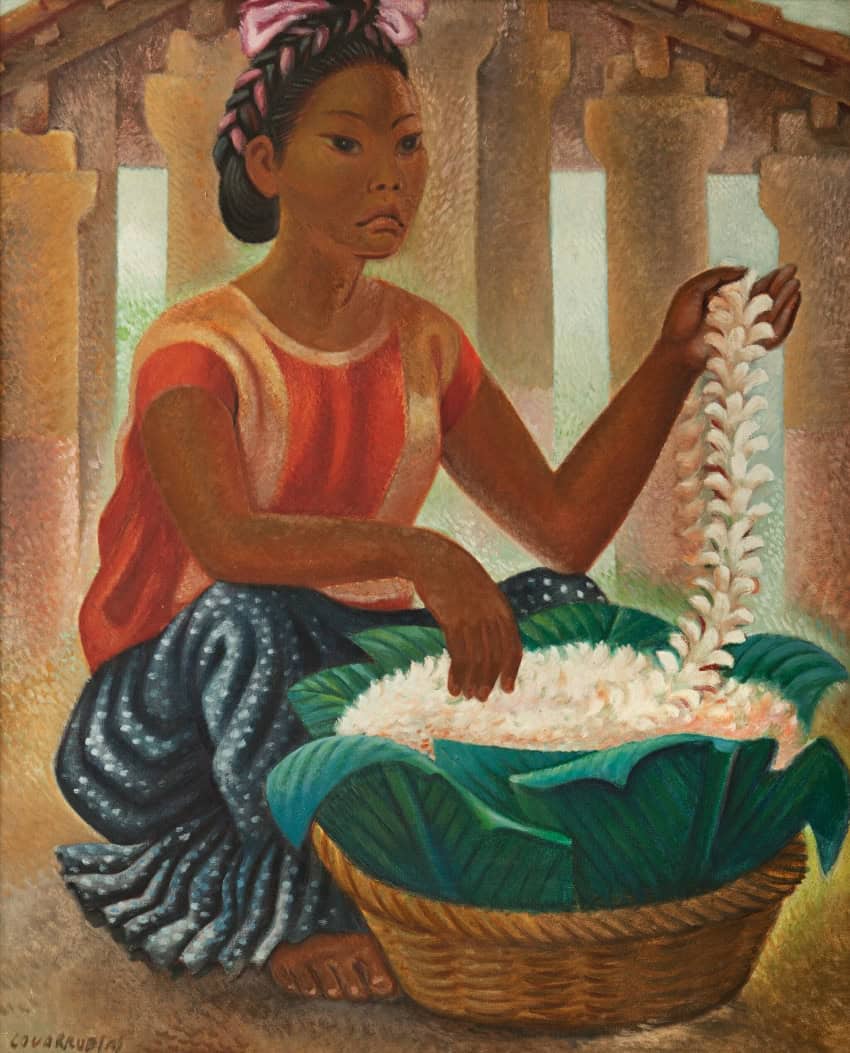 The Covarrubias coating “Mujer Sentada con Flores,” which dates from 1935. (Sotheby’s)
The aforesaid curiosity that fto him spot Harlem arsenic sophistication alternatively of spectacle, that fto him work a Balinese temple carving arsenic surviving civilization alternatively than curiosity and that fto him spot an Olmec jaguar motif buried wrong aboriginal Maya chromatic work, is precisely the curiosity that told him question itself — bodies successful abstraction — belonged successful the aforesaid nationalist task arsenic murals and museums. Covarrubias ne'er separated the ocular from the physical, the fashionable from the scholarly, oregon Mexico from the remainder of the world. He simply kept looking, and kept insisting that what helium saw belonged successful the authoritative record.
A beingness without borders
Covarrubias died successful 1957, astatine 53, from complications apt related to diabetes oregon an ulcer. Friends said helium seemed, toward the end, to suffer his volition to unrecorded — though by each relationship his caput kept generating caller projects until the precise past moment.
In hardly 5 decades, helium near down an inheritance that softly reshaped however 2 nations saw each other: an American ocular civilization that inactive carries his fingerprints, a assemblage of ethnographic enactment that helped recovered ocular anthropology arsenic a subject and an archaeological penetration that permanently repositioned the Olmec astatine the basal of Mesoamerican history. He was, earlier the word existed, a full-time taste translator — idiosyncratic who moved fluidly betwixt elite salons and ineffable ruins, betwixt jazz clubs and faraway islands, betwixt the pen and the choreographer’s studio, ever convinced that civilization belongs to whoever is funny capable to spell looking for it.
Maria Meléndez writes for Mexico News Daily successful Mexico City.




 English (CA) ·
  English (US) ·
  Spanish (MX) ·
  French (CA) ·